Fourteen miles from downtown Grand Prairie and sprawling across more than 17,000 acres of North Texas, Dallas Fort Worth International Airport (DFW) is one of the busiest airports in the country — and on any given travel morning, it has a dependable way of turning a straightforward group departure into a logistical headache before anyone clears security. Five separate terminals along International Parkway. A terminal parking garage that runs $32 per car, per day.
Peak-hour traffic on SH-183 through Irving that can double your drive time without warning. Getting 40 people to DFW in the same window, to the right terminal, without someone getting stranded at the wrong curbside, is a coordination puzzle most groups underestimate until they're living it. One charter bus to DFW Airport collapses all of those separate problems into a single pickup and drop-off.
This guide covers exactly how charter bus and party bus drop-off works at DFW — which level, which terminal for your airline, and the specific coordination step most groups skip — along with an honest look at how driving, rideshare, and public rail stack up for a group coming from Grand Prairie. Whether you're moving a 40-person corporate delegation from Grand Prairie to Terminal E for an early Monday flight or shuttling a reunion group to Terminal D for an international connection, the logistics below apply directly to your trip. Compare quotes any time through the Grand Prairie airport transportation page on Partybusgrandprairie.com, or call 817-562-9781 — pricing comes back in under a minute, no account needed.
Why Rent a Party Bus or Charter Bus to DFW Airport?
The question every group coordinator eventually hits is a version of the same problem: how does everyone get there, on time, to the right terminal? For a group of 20 people all flying together, the carpool math alone takes twenty minutes to figure out. Two people don't drive.
One person lives on the far side of Mansfield. A handful of passengers are on an early American connection out of Terminal A, while the rest of the group boards Delta at Terminal E — two different buildings, two separate curbsides, two separate parking passes. At DFW's terminal garage, $32 per car per day accumulates fast across a week-long business trip.
Across 10 cars, that's $2,240 before anyone accounts for gas or the shuttle from the remote lot.
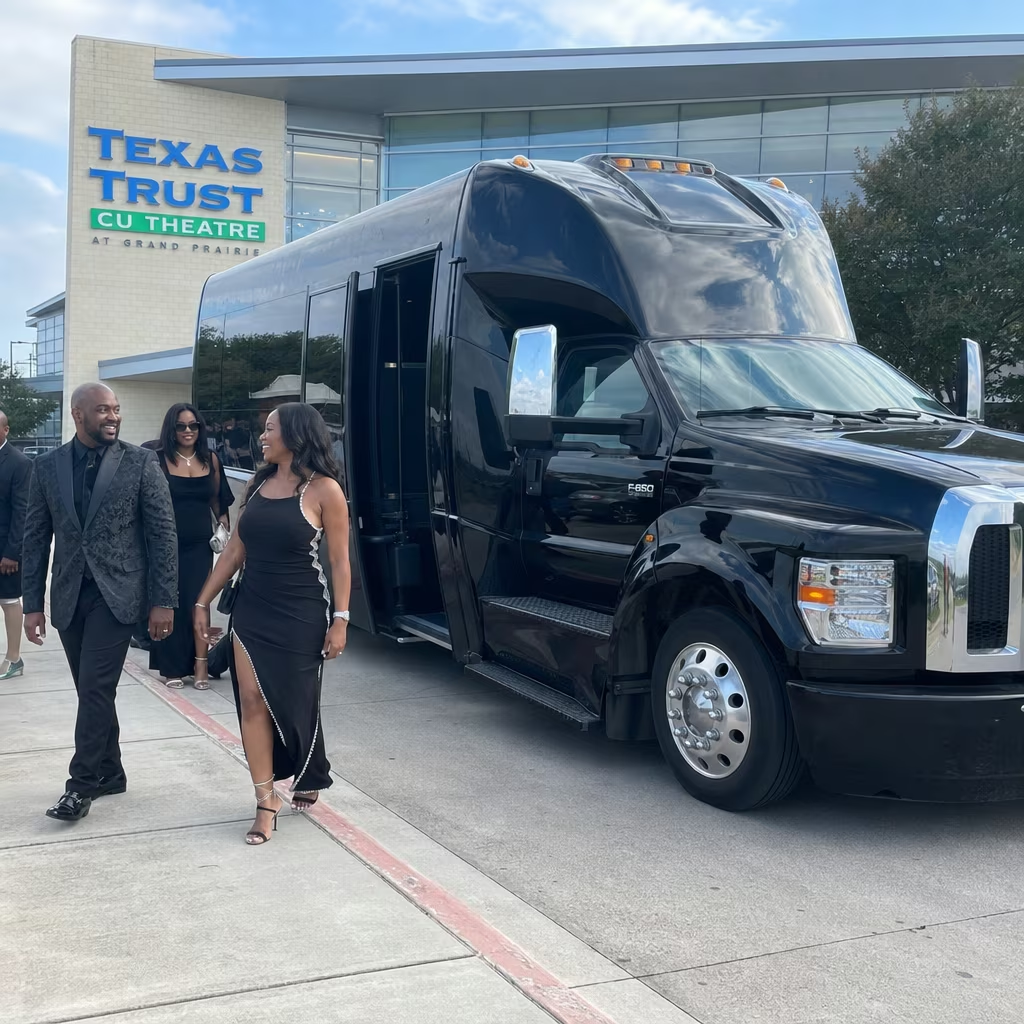
A Grand Prairie charter bus to DFW Airport eliminates the entire coordination layer in one move. One pickup location, one drop-off at the correct terminal's lower-level curb, no parking passes, and no three-car caravan splitting apart on SH-183 during the morning peak. The bus handles the approach while the group handles the trip.
When the flight lands, the bus is staged and ready for the return run instead of waiting in a surge-priced rideshare queue at the upper-level curb.
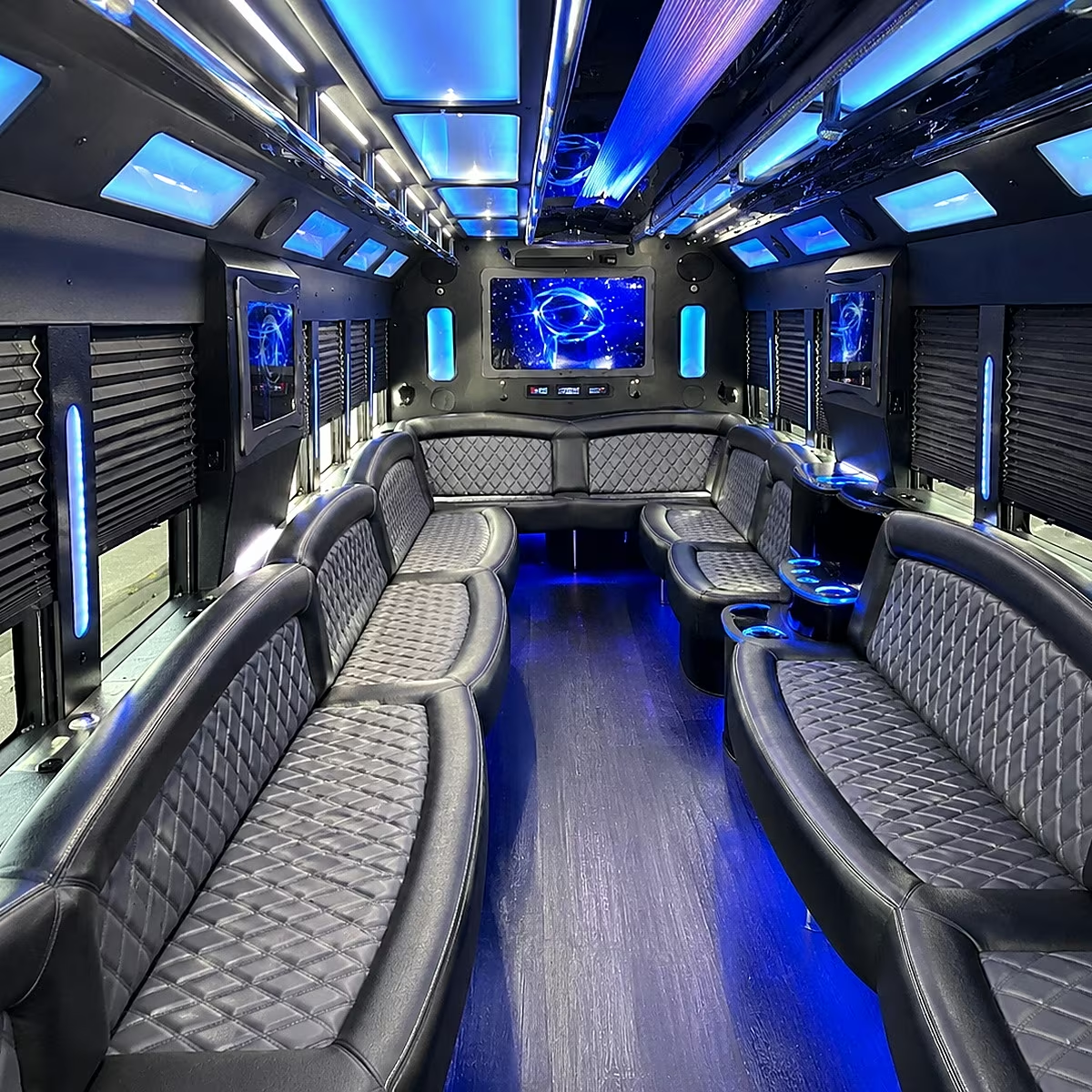
For corporate travel groups departing for a conference or a client visit, a Grand Prairie corporate charter bus rental keeps pre-departure logistics simple — everyone boards at one address instead of trickling in across a parking structure. For large families, sports teams, or any group checking significant luggage, a full-size charter bus brings deep undercarriage bays that handle hard-shell cases and oversized gear in a way that three sedans simply cannot. The bus is not always the right answer for one or two people — but the moment your headcount climbs past a dozen, the math and the coordination both start pointing the same direction.
Charter Bus and Party Bus Drop-Off at DFW Airport
Charter buses pick up and drop off from the Lower Level (Arrivals Level) curbside at each terminal, consistent with DFW's ground transportation page. That is the same level as baggage claim — your group exits the arrivals hall, collects luggage, and steps to the exterior curb where the bus stages. Rideshare vehicles (Uber, Lyft) use the Upper Level (Departures Level) of each terminal.
Those are two completely different buildings in terms of curbside location. Make sure every person in your group knows: Lower Level, exterior curbside, arrivals side — not upstairs at the ride-app pickup zone.
One terminal-specific detail worth knowing now, before travel day: Terminal C's Lower Level can be congested due to ongoing construction. For groups arriving at Terminal C and needing a large-vehicle pickup, using the post-security Skylink people mover to reach Terminal D's Lower Level — which offers more curbside space for oversized vehicles — and coordinating the bus pickup there instead can help. That option works for arriving passengers who want to consolidate at a less congested curb; departing passengers dropping off at Terminal C simply use that terminal's curbside as normal.
The "Ready Call" Rule Every Group Coordinator Needs to Know
Here is the single most important operational detail for any charter bus pickup at DFW: do not call the bus until your entire group has their luggage and is standing at the Lower Level curbside. DFW's security and traffic regulations prohibit buses from parking at the terminal curb while waiting for passengers. The bus must remain in a remote staging area until the group is assembled and ready — the coordinator makes one call, and the bus moves.
If the group is not actually at the curb when the bus arrives, airport police can require it to circle. One full loop through International Parkway and back takes approximately 20 additional minutes.
The solution is simple: designate a single coordinator before anyone boards the plane, set up a group text thread, and establish one clear rule — everyone collects luggage, walks to the exterior Lower Level curbside, and waits. The coordinator does a headcount. When the full group is in one spot with all bags, the coordinator makes the call.
That sequence costs nothing and saves 20 minutes. Skipping it costs 20 minutes, minimum, on a tight departure morning.
Call when the group is assembled at the curb — not when the last bag drops at baggage claim. Baggage claim to the exterior curbside door takes several minutes, and partial readiness forces the bus to circle. One coordinator, one call, everyone together first.
That sequence is the difference between the bus being at the curb when you walk out and the bus being somewhere on International Parkway making another loop.
Know Your Terminal: Which Airline Flies from Where at DFW?
DFW has five active terminals — A, B, C, D, and E — arranged in semicircular opposing clusters along International Parkway. If your group is split across different airlines or connecting flights, different people may be in entirely different buildings. Confirm your specific terminal from your flight confirmation before travel day, because even within a single airline the terminal assignment matters.
Here is the breakdown, per DFW's official airline and gate directory:
| Terminal | Primary Airlines | Operational Notes |
|---|---|---|
| A | American Airlines | 36 gates; DART Orange Line rail station on Lower Level (entry door A-10) |
| B | American Airlines | 45 gates; TEXRail and DART Silver Line station on Lower Level |
| C | American Airlines | 38 gates; Lower Level can be congested — large-group pickups may work better at Terminal D via Skylink |
| D | International carriers — Air France, British Airways, Emirates, Japan Airlines, Korean Air, Lufthansa, Qantas, Qatar Airways, and others; some domestic service | 33 gates; primary international hub at DFW |
| E | Delta Air Lines, United Airlines, Alaska Airlines, Frontier Airlines, JetBlue, Air Canada | 41 gates; domestic U.S. and Canada routes |
The terminal complexity is real for American Airlines passengers: American uses Terminals A, B, and C, so two people on the same airline could be in different buildings depending on their gate assignments. A charter bus can make two terminal drops on a single run — one at Terminal A and one at Terminal E, for example — if your group is split across airlines. Plan those two drops when you book and confirm both terminal assignments from your flight confirmations the night before.
DFW Airport Parking Costs vs. a Charter Bus Rental from Grand Prairie
The parking math at DFW is worth running before you organize a carpool chain. Here are approximate on-airport parking rates — rates are subject to change, so check the official DFW parking page for the most current figures before your trip:
| Parking Option | Daily Rate (approx.) | Shuttle to Terminal? | 7-Day Cost (1 car) |
|---|---|---|---|
| Terminal Garage | ~$32/day | No — direct walk to terminal | ~$224 |
| Express Covered | ~$21/day | Yes — on-demand | ~$147 |
| Express Uncovered | ~$18/day | Yes — on-demand | ~$126 |
| Remote North / Remote South | ~$14/day | Yes — every 15–20 minutes | ~$98 |
| Valet | ~$45/day | No — drop-off at your terminal curb | ~$315 |
For a 40-person travel group organizing themselves into 10 cars, each using the Remote lot for a 7-day trip, that's approximately $980 in parking alone — before gas, before the free shuttle wait at the remote lot, before the person who forgets which row they parked in on a red-eye return. That same group on a single 40-passenger charter bus pays one flat rate for the round-trip airport run, steps off at the same curbside, and nobody needs to locate a car at 11 PM after a delayed flight. See the Grand Prairie bus pricing page for a current planning range on what that charter bus run costs by vehicle size.
The calculus is different at the smaller end: for one or two people flying solo on a week-long trip, the Remote lot at ~$14/day or a rideshare is hard to beat. A charter bus earns its keep the moment the group grows past 8 or 10 people and the coordination cost of separate cars starts stacking — past 20 or 30 passengers, the per-head cost of one bus routinely comes in below what each person would pay for their own remote-lot parking across the same trip.
10 cars × $14/day (Remote lot) × 7 days = $980 in parking, before gas or the shuttle queue. A 40-passenger charter bus covers that same group, both ways, for a single predictable rate — and nobody needs to find their car after a red-eye home from a flight that landed an hour late.
Every Way to Get a Group to DFW: An Honest Look
DFW has more ground transportation infrastructure than most Texas airports — DART rail, TEXRail, TRE commuter rail, rideshare, and full on-airport parking. Here is an honest breakdown for group travel originating from the Grand Prairie area, where none of the rail options offer a direct connection:
| Option | Cost Shape | Group Arrives Together? | Terminal Access | Best For |
|---|---|---|---|---|
| Private charter bus | One flat rate, split across the group | Yes — one vehicle, one curbside drop | Lower Level of any terminal (A–E) | 15–56 passengers, any group with checked luggage or gear |
| DART Orange Line | Per-person fare | Only if everyone boards the same train | Terminal A Lower Level (door A-10) only | Solo travelers already within the DART service area; not direct from Grand Prairie |
| TEXRail / DART Silver Line | Per-person fare | Only if everyone boards the same train | Terminal B Lower Level only | Travelers from Fort Worth, Grapevine, or Carrollton; requires driving to a station from Grand Prairie |
| TRE to CentrePort Station | Per-person fare + TRE Link shuttle transfer | Only if on the same train | Free shuttle (TRE Link) from CentrePort to terminals — a second transit leg | Downtown Dallas or Fort Worth travelers with time to spare; not practical for large groups with bags |
| Rideshare (Uber/Lyft) | Per car, each way — surge pricing on return | No — multiple cars, staggered ETAs | Upper Level of each terminal (departures side) | 1–4 people, carry-ons only, flexible timing |
| Drive and park | $14–$32/day per car + gas | No — caravan splits on SH-183 | Depends on lot and shuttle | 1–2 cars, short trips where parking beats bus cost per head |
For Grand Prairie specifically, none of the rail options provide a direct connection to DFW — each one requires driving to a rail station first, then boarding, then transferring at the terminal end. For a solo commuter with a carry-on and a morning with slack in it, the DART Orange Line from an Irving station to Terminal A is a reasonable call. For a group of 25 coming from Grand Prairie with checked bags on a 6 AM flight, it adds two transfer legs onto a trip that a single charter bus handles door-to-door.
A Grand Prairie charter bus or party bus rental to DFW is the only option that picks the group up at one address and delivers them to the correct terminal curbside with no transfers in between.
The Drive from Grand Prairie to DFW Airport: Routes and Timing
DFW Airport sits roughly 14 miles north of downtown Grand Prairie, accessible primarily via SH-183 (Airport Freeway) — the road is literally named for the destination it serves. From Grand Prairie, the most common approach is north on SH-360 to west on SH-183, which feeds into the airport's south entry and then International Parkway. Off-peak, that run covers the 14 miles in approximately 16–23 minutes.
During morning rush hour — the SH-183 corridor through Irving runs heavily congested from roughly 5–8 AM and again from 4–7 PM — that window can stretch to 40–60 minutes or more on a bad day. A group bus departure planned around a 6 AM flight needs to leave Grand Prairie no later than 4:30–4:45 AM to keep a safe buffer.
The south entry to DFW via SH-183 lands you on International Parkway headed toward Terminals D and E first. If your group is flying American (Terminals A, B, or C), the bus continues north past D and E to reach the A/B/C cluster on the north side of the airport. For groups on the north-terminal airlines, an alternate approach via SH-114 (from Las Colinas/Irving) or I-635 drops in at the airport's north end — closer to Terminals A and B — and can be the faster route if SH-183 is backed up.
Which approach your bus uses depends on your terminal, and your coordinator will lock that in when you book.
One entry detail worth knowing: all vehicles entering DFW pay a toll on International Parkway. The airport accepts TollTag and contactless card at its toll plazas — no cash. Ground transportation providers typically factor tolls into their pricing.
Personal vehicles should plan for the toll on both entry and exit.
What Size Bus Does Your Group Need for the DFW Airport Run?
The right vehicle for a Grand Prairie airport charter bus rental comes down to two variables: how many people are traveling together and how much goes in the hold. Here is how the full vehicle lineup breaks down for an airport transfer:
| Vehicle | Passengers | Luggage Capacity | Best For |
|---|---|---|---|
| Sprinter Van | Up to ~14 | Rear cargo area — moderate checked-bag-style luggage | Small executive groups, families flying together, compact corporate teams |
| 14-Passenger Sprinter Limo | Up to 14 | Limited — best for carry-ons and personal bags | VIP or client groups where the departure experience matters as much as the flight |
| 15–35 Passenger Minibus | 15–35 | Overhead bins plus some underfloor storage | Mid-size groups, athletic teams with moderate gear, corporate shuttles with rolling luggage |
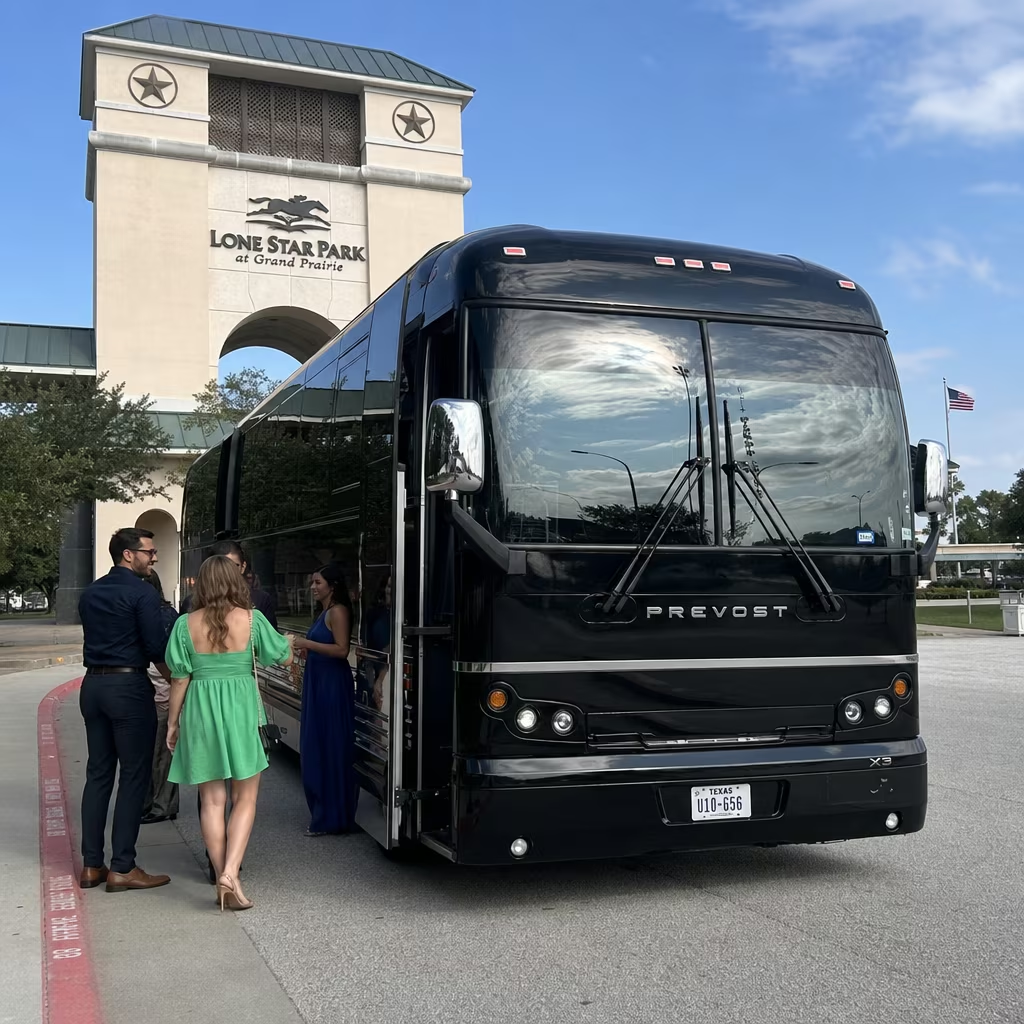
| 40–56 Passenger Charter Bus | Up to 56 | Deep undercarriage bays — hard-shell cases, equipment bags, large checked luggage | Large travel groups, full corporate delegations, sports teams with significant equipment |
For most Grand Prairie airport runs, the practical split comes down to headcount and what goes in the hold. A minibus handles a mid-size corporate team heading to a 3-day conference — overhead bins for carry-ons, some underfloor room for rolling bags. A full-size charter bus is the right answer the moment you're moving 35 or more people, or any group where equipment cases, sports gear, or multiple hard-shell bags are involved.
The undercarriage bays on a 56-passenger coach are built for exactly that kind of load. If you're uncertain which vehicle fits your headcount and cargo, call 817-562-9781 and walk through it — that call takes about two minutes and you'll leave with a firm recommendation.
How Much Does a Charter Bus or Party Bus Rental to DFW Airport Cost?
Pricing for a DFW airport charter bus rental from Grand Prairie varies with vehicle size, total billable hours, and the day of the week. To give you a planning range: minibus rentals run approximately $200–$250 per hour on weekdays and $200–$275 per hour on weekends, with per-day rates from roughly $1,100–$2,150. Full-size charter buses run approximately $200–$350 per hour on both weekdays and weekends, with per-day rates from roughly $1,350–$2,850.
Your quote for your date, headcount, and pickup-to-drop itinerary comes back in about a minute through the online quote tool or by calling 817-562-9781. No account needed, no obligation.
To ground those ranges in a concrete example: a 40-person Grand Prairie group books a 40-passenger charter bus for a round-trip airport transfer. Pickup at a Grand Prairie hotel at 5:30 AM, at Terminal E by 6:10 AM for a 7:30 AM departure — then a return pickup at Terminal A on the group's inbound flight four days later. Total billable time for both legs is roughly 3–4 hours.
At a midrange hourly rate, that comes to approximately $600–$1,400 for both runs combined. Split across 40 passengers, that lands around $15–$35 per person round trip — well below what each of those 40 people would pay parking a single car in the Remote lot for four days ($14/day × 4 = $56 per vehicle), and that figure doesn't include gas or the coordination cost of organizing 10 separate departure windows.
Peak travel periods around DFW — the summer travel rush from June through August, major holidays, and event weekends tied to venues like AT&T Stadium in Arlington — push demand and reduce availability. If your group's departure falls in a busy window, booking 2–4 weeks in advance is the safer move. See the Grand Prairie pricing page for planning ranges across every vehicle type.
Tips for Your DFW Airport Charter Bus or Party Bus Transfer
A few things every group coordinator should lock in before the bus rolls:
- Confirm your terminal from your actual flight confirmation — not from memory. American Airlines alone uses Terminals A, B, and C at DFW. Your gate assignment printed on your boarding pass determines which terminal curbside your bus heads for. Getting this wrong means a loop back on International Parkway.
- Designate one coordinator for the "ready call" and give the whole group that one rule. Everyone walks out of baggage claim, goes directly to the Lower Level exterior curbside, and waits with luggage in hand. The coordinator does a headcount. When everyone is there, the coordinator calls. Partial readiness costs 20 minutes per loop at DFW — that rule is worth communicating clearly before the flight departs.
- If your group is arriving at Terminal C, discuss the Terminal D pickup option in advance. The Lower Level at Terminal C can be congested due to construction. For a large-vehicle pickup, reaching Terminal D's Lower Level via the Skylink (which runs post-security every 2 minutes) gives you more curbside space. Coordinate where the group meets the bus before they land so nobody is waiting in two different buildings.
- Build in extra time for the SH-183 approach during peak hours. The Airport Freeway corridor through Irving is among the most reliably congested stretches in the Metroplex during the 5–8 AM and 4–7 PM windows. For a pre-dawn flight, the bus should leave Grand Prairie no later than 2.5–3 hours before your departure time to keep a clean buffer for traffic, check-in, and security.
- For return pickups with staggered arrivals, DFW operates two complimentary waiting areas. The North Cell Phone Lot (53 parking spaces, located before the north toll plaza — closest to Terminals A and B) and the South Cell Phone Lot (approximately 60 spaces, near the intersection of Rental Car Drive and Southgate Avenue — closest to Terminals C, D, and E) both allow free vehicle staging for up to two hours, per the official DFW cell phone lot page. The bus stages there between incoming waves and moves to the terminal curbside the moment the coordinator calls with a full headcount.
- Flag any oversized luggage or equipment when you request the quote. Sprinter vans and minibuses have significantly less cargo room than a full-size charter bus. Sports equipment bags, hard-shell instrument cases, and large checked-luggage-style pieces all belong in the undercarriage bays of a 40–56 passenger coach — if your group is hauling that kind of gear, that vehicle size is the practical choice, not an upgrade.
Rail Service at DFW: What Each Line Covers and What It Doesn't
DFW connects to three separate rail systems, and understanding what each one actually covers is useful context — especially for groups coming from Grand Prairie, where there is no direct rail station for any of the three. Here is a quick rundown, per the official DFW public transit page:
DART Orange Line runs from Plano through downtown Dallas and Irving to Terminal A's Lower Level station (enter at door A-10). If your group is already within the DART service corridor and flying American out of Terminal A, it works reasonably well for individuals with carry-ons. For a 20-person group departing from Grand Prairie with checked bags, it requires everyone to reach a DART station by car first — that's a separate vehicle leg before the train leg, on both ends.
DART Silver Line, a newer service, runs from Plano through Richardson, Addison, Carrollton, and Coppell to Terminal B. Same dynamic: useful for travelers already on that corridor north of Dallas, not a practical connection from Grand Prairie.
Trinity Metro TEXRail covers a 27-mile line from downtown Fort Worth through North Richland Hills and Grapevine to Terminal B. For groups based in Fort Worth, it is a meaningful option. From Grand Prairie, you'd need to drive to a connecting station first, which reintroduces the car-coordination problem the train was supposed to solve.
Trinity Railway Express (TRE) connects downtown Dallas and downtown Fort Worth to the CentrePort/DFW Airport Station at the airport's south end. From there, a free TRE Link shuttle connects to the actual terminals. That is two transit legs just to reach baggage claim — manageable for a solo commuter with no bags and a flexible schedule, not practical for a 30-person group with checked luggage coordinating at 5 AM.
For Grand Prairie groups, every rail route adds at least one driving transfer leg on the Grand Prairie end before the train even starts. A single charter bus from Grand Prairie to DFW is the only option that handles the full door-to-terminal journey without a break in the chain.
Frequently Asked Questions
Where does a charter bus or party bus drop off at DFW Airport?
Charter buses use the Lower Level (Arrivals Level) curbside at each terminal — the exterior curb at the same level as baggage claim. Rideshare apps (Uber, Lyft) use the Upper Level (Departures Level). Make sure your group knows the difference and heads to the lower level exterior after collecting luggage.
For Terminal C arrivals, the Lower Level can be congested due to construction — coordinate with your bus in advance about whether Terminal D's Lower Level (reachable via post-security Skylink) would be a better pickup point for your group size.
Do I need to reserve a charter bus to DFW Airport in advance?
Yes. Charter buses at DFW are not available for unscheduled curbside pickup — they must be contracted in advance, and they cannot park at the terminal curb waiting for an unbooked group. For peak travel periods (summer months, major holidays, busy event weekends in the Metroplex), booking 2–4 weeks out locks in your vehicle and rate.
For standard travel dates, a week or more of lead time is workable.
How does the bus coordinate a group pickup when my flight lands?
One designated group coordinator tracks everyone through baggage claim and waits until the full group is assembled at the Lower Level exterior curbside with all luggage. At that point — and only at that point — the coordinator makes one call. The bus moves from its staging area and pulls to the curb.
Calling before the group is fully assembled risks forcing the bus to circle, which can add approximately 20 minutes per loop under DFW's traffic management rules. Gather the whole group first, then call.
What if my group is flying out of two different terminals?
A charter bus can make two terminal drops on a single run — Terminal A for American passengers first, then Terminal E for Delta or United passengers, for example. Build both terminal assignments into the booking when you request your quote, and confirm the terminal for each person from their actual flight confirmation the evening before travel day.
Where does the bus wait between pickup waves if my group has staggered arrivals?
DFW operates two complimentary vehicle staging areas for exactly this scenario. The North Cell Phone Lot (53 spaces, near the north toll plaza, closest to Terminals A and B) and the South Cell Phone Lot (approximately 60 spaces, near Rental Car Drive and Southgate Avenue, closest to Terminals C/D/E) both allow free waiting for up to two hours, per the official DFW cell phone lot page. The bus stages at the appropriate lot between waves and moves to the terminal curbside when the coordinator calls with a full headcount.
How early should a group leave Grand Prairie to catch a flight at DFW?
From Grand Prairie via SH-360 to SH-183, plan on 16–23 minutes off-peak for the roughly 14-mile run. During morning rush hour on SH-183 through Irving — which runs reliably from around 5 to 8 AM — that same stretch can take 40–60 minutes on a congested day. For early morning flights, the safest general rule is to leave Grand Prairie at least 2.5–3 hours before departure time, which accounts for traffic, check-in, and security without creating an unnecessary 5-hour buffer.
Your coordinator will work backward from your departure time to set a practical pickup window.
Can a charter bus handle sports equipment or oversized luggage?
Full-size charter buses come with undercarriage bays that accommodate hard-shell equipment cases, duffel bags, instrument cases, and large rolling luggage — the kind of load that does not fit in three sedans. If your group is a sports team, a band, or anyone checking significant gear at the airport, a 40–56 passenger charter bus is the right vehicle. A Sprinter van or minibus has considerably less cargo room; flag your luggage situation when requesting a quote so the right vehicle gets matched to your group from the start.
How much does a charter bus or party bus rental to DFW Airport from Grand Prairie cost?
To give you a planning range: minibus rentals run approximately $200–$250 per hour on weekdays; charter buses run approximately $200–$350 per hour. Your quote for your date, headcount, and route comes back in about a minute through the online quote tool or by calling 817-562-9781. No obligation, no account required, and the quote is free.
What is the difference between the North and South Cell Phone Lots at DFW?
DFW operates two separate complimentary waiting areas for vehicles staging between terminal pickups. The North Cell Phone Lot (53 spaces) sits near the north entry, before the north toll plaza, and is closest to Terminals A and B. The South Cell Phone Lot (approximately 60 spaces) is near the intersection of Rental Car Drive and Southgate Avenue, closest to Terminals C, D, and E. Both are free for up to two hours and require someone to remain with the vehicle at all times. Match the lot to your group's terminal for the shortest move when the pickup call comes in.
Does the charter bus include the airport toll?
All vehicles entering DFW pay a toll on International Parkway, and the airport accepts TollTag and contactless card — no cash. Ground transportation providers typically factor airport toll access into their pricing. When you request your quote, confirm how tolls are handled for your specific booking so there are no surprises at the toll plaza.
Book Your DFW Airport Charter Bus or Party Bus Rental from Grand Prairie
Whether it is a 40-person corporate team heading to Terminal E for a Monday morning flight, a reunion group catching an international connection at Terminal D, a sports team with equipment making an early departure, or a family group that just wants everyone at the same curbside without three separate rideshare pickups — Partybusgrandprairie.com makes it easy to find and compare the right vehicle from Grand Prairie to DFW Airport. Fill out the quick online form or call 817-562-9781 any time. Pricing comes back in under a minute, no account required, and a support team is one call away if you want to talk through terminal assignments, staging logistics, or which vehicle fits your group's cargo situation.
One bus, one curbside drop, and nobody circling the short-term garage at 4:30 in the morning.
Also planning a group event in the Metroplex after landing? The AT&T Stadium charter bus guide covers group transportation to Arlington's biggest venue — a natural add-on for groups connecting through DFW and heading straight to a game or major event.